Project WASP
An Autonomous Self Watering Planter using Atmospheric Water
Research
Question
Can we design a fully autonomous, self-contained, customizable agricultural system that sustains plant life long-term using atmospheric water sources and self-regulating moisture and UV Light?
Objectives
To design a system that:
  1. Is fully customizable for different plants and applications
  2. Self-optimizes light and soil moisture
  3. Sustainably harvests atmospheric water (AW) and solar power
  4. Is proven to sustain plant growth in a proof-of-concept experiment
  5. Can be scaled up to automate industrial agriculture
Methods
Hardware

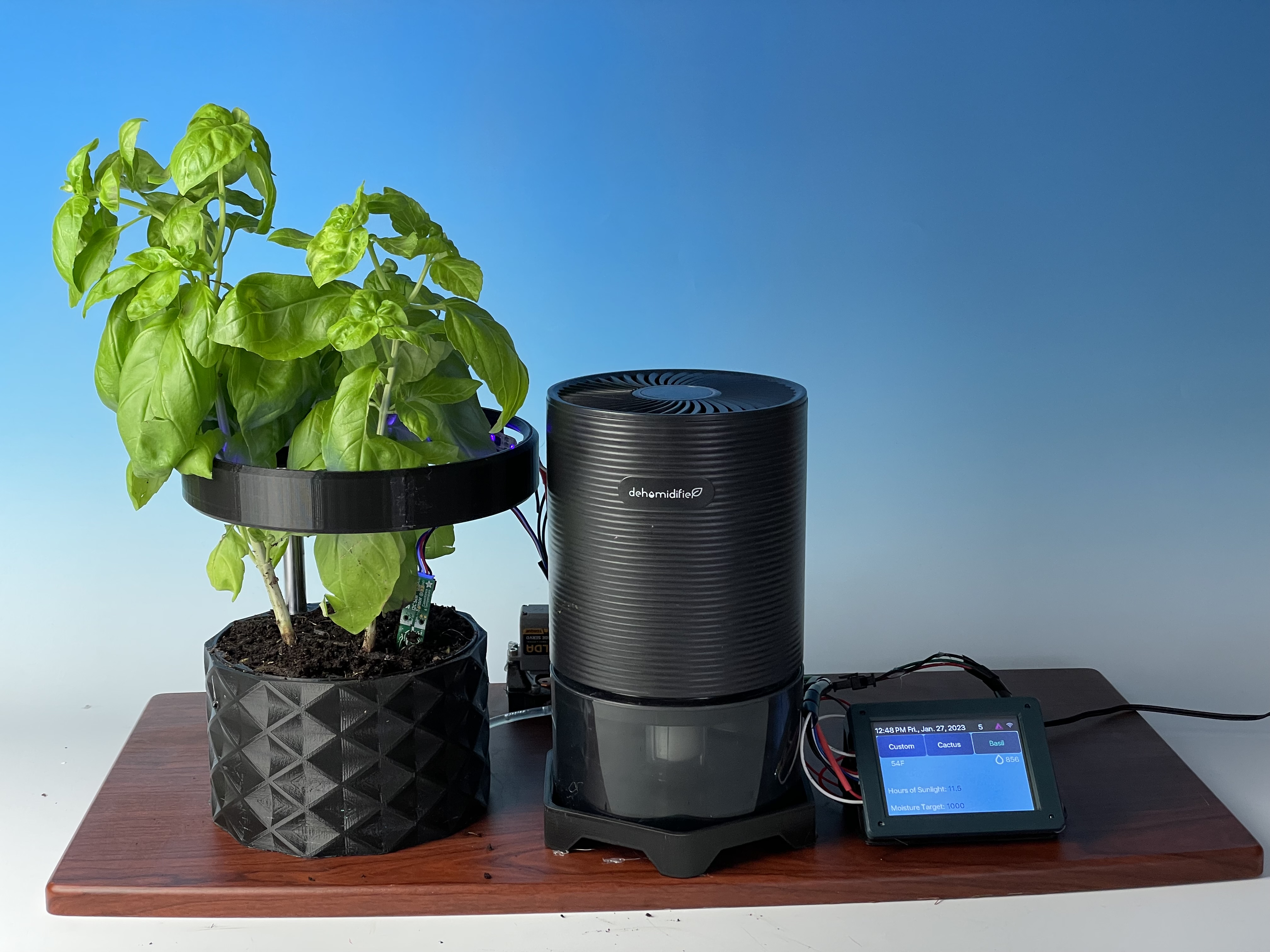
Technology using cooling plates (dehumidifier) was selected to harvest AW. Custom components were designed in Fusion 360 and 3D printed using plant-based PLA filament. The WASP system is composed of UV-LED lights, a peristaltic pump, an Adafruit pyPortal Titano IoT device, a soil moisture sensor, and a Savinder dehumidifier for harvesting atmospheric water.
Software

A microcomputer called the pyPortal Titano was programmed in Circuit Python to regulate soil moisture and light exposure by controlling the parastaltic pump and UV LED lights. It provides users with a GUI that enables them to select predefined values for moisture and light levels, as well as the ability to customize their own profile.
Power

Project WASP was powered by solar energy, which was generated by two solar panels. These panels were connected to a solar charge controller that regulated the incoming voltage. The charger controller recharged a 12V lead acid battery, which supplied power to all the electrical components of Project WASP, including the pyPortal Titano, UV lights, and the Savinder dehumidifier.
Experimental
Design
Experimental Plants
(Trial 1)
Negative Control
(Trial 2)
Positive Control
(Trial 3)
Plant Type Plant AW UV-Light Plant AW UV-Light Plant Manual Water Sun Light
Cactus A yes yes D no yes G yes yes
Rosemary B yes yes E yes no H yes yes
Basil C yes yes F no no I yes yes
Statistical
Analysis
Plant height (an important indicator of plant growth*) was measured at the start of the experiment and after 2 months. The difference in plant heights was used to estimate plant growth. The average difference in plant height was calculated for each trial, and the mean height differences between trials 1 & 2 and trials 1 & 3 were compared using a 2-tailed Student's t-test, assuming unequal variances. Significance was defined as p < 0.05.

*Yu Jiang et al. Computers and Electronics in Agriculture Volume 130, 15 November
Project
Results
Objectives 1-4 of Project WASP have been successfully met as follows:
  1. Project WASP is fully customizable for various plants, such as cactus, basil, and rosemary.
  2. An IoT computer self-optimizes light and soil moisture levels by controlling a peristaltic pump and UV LED lights.
  3. A Savinder dehumidifier and two solar panels sustainably harvest atmospheric water and solar energy.
  4. P-value (0.049) indicates that Project WASP was able to successfully sustain plant growth in proof-of-concept trials
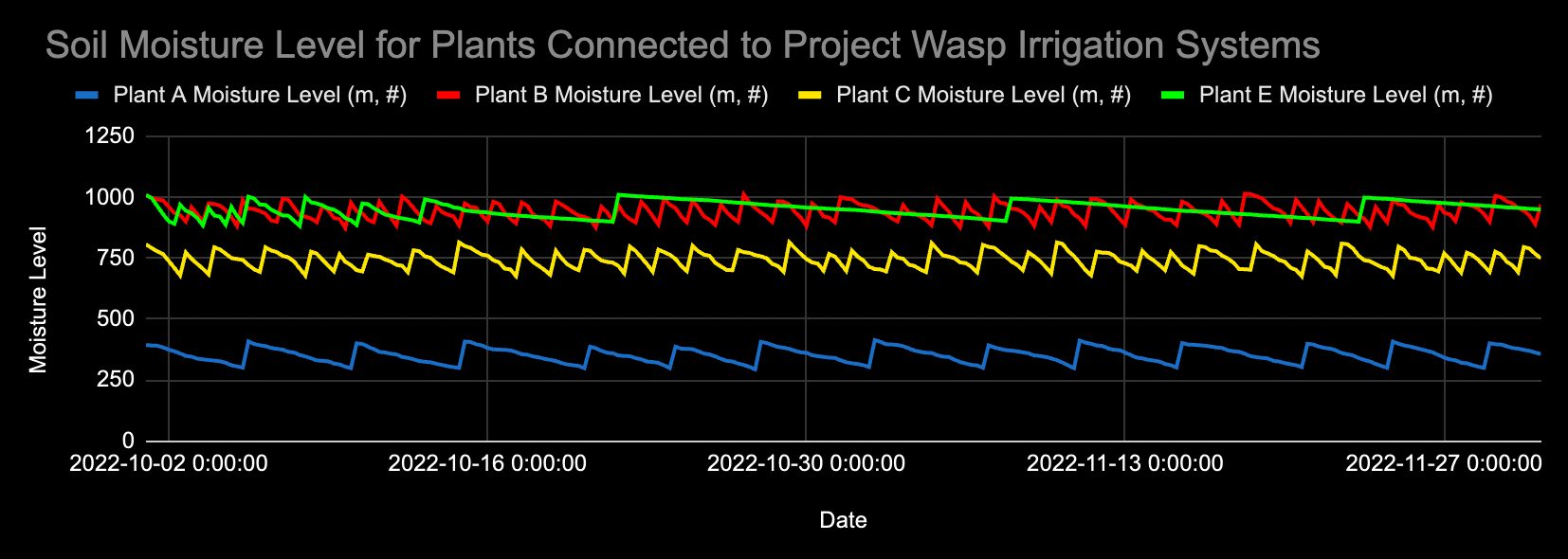
Figure 1: Target soil moisture levels were 400 for cacti, 800 for basil, and 1000 for rosemary. All soil moisture levels were maintained within 100 points of the target.
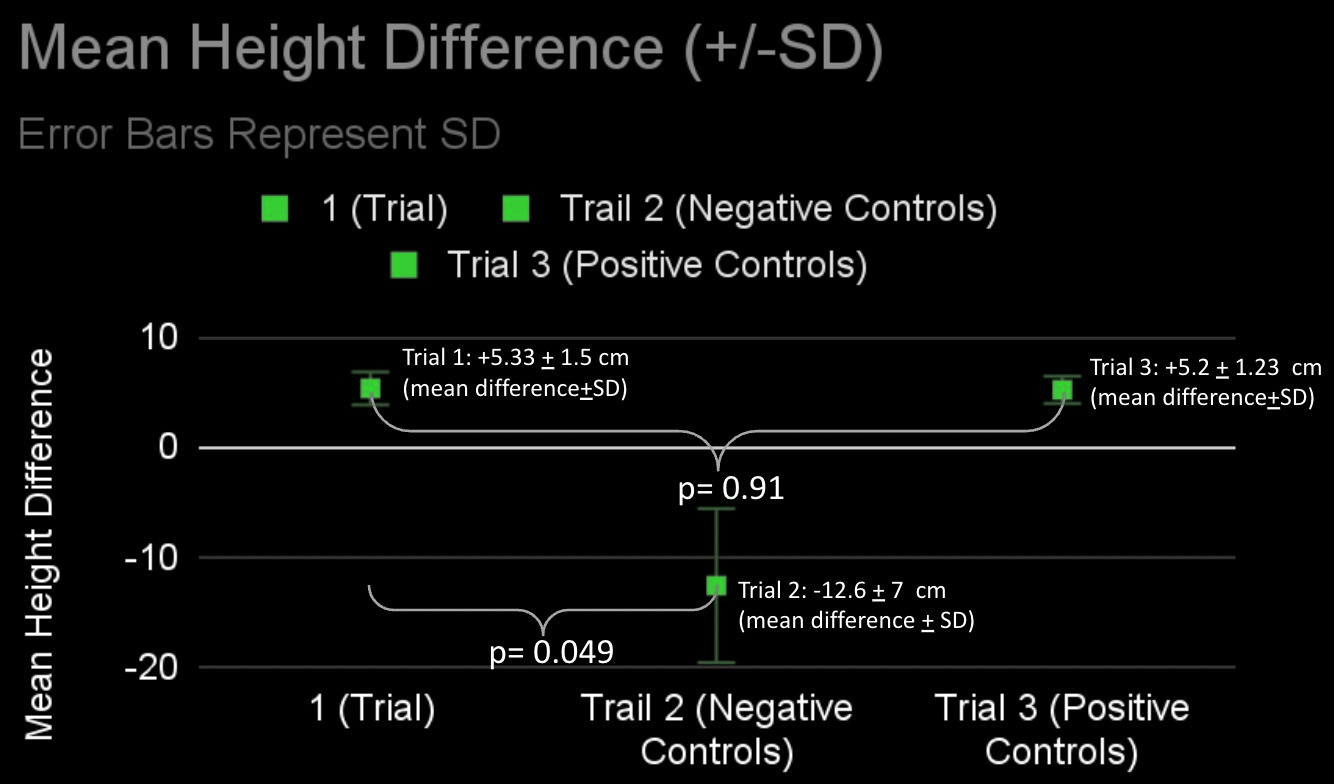
Figure 2: A Student’s t-test compared mean plant growth between trial 1 & 2 and between trial 1 & 3. Mean plant growth was significantly greater in trial 1 (experimental plants) than trial 2 (NC) (p=0.049). Mean plant growth was similar between trial 1 (no human caretaking) and trial 3 (PC- with human caretaking) (p=0.91).
Cost Analysis
Item Cost Planters Supported by One Part Cost Per Planter
pyPortal $60 6 $10
Moisture Sensor $13 1 $13
Dehumidifier $33.29 2 $16.65
UV Led Strip $24.95 2 $12.475
Servo Motor $31.99 1 $31.99
PLA Filament (509.92 g) $18.49 1 $18.49
Surgical Tubing (10ft) $8.54 12 $0.71
Heat Shrink Tubing $13.99 15 $0.93
Hot Glue $17.99 200 $0.1
Wood Plank $5.64 1 $5.64
Solar Panels $87 12.14 $7.16
stepdown converters $10 6 $1.67
Lead Acid Battery Charger $12 12.14 $0.98
Lead Acid Battery $23 40.38 $0.57
Jumper cables (120 pack) $7 7.5 $0.93
Alligator clips (20) $6 4 $5
Breakout Board $14.95 6 $2.50
Total $388 $129
The cost analysis presents the cost per planter of the materials needed to construct WASP plant care systems. The cost to construct one planter is $388, and the cost per planter at scale is $129. The system consumes 0.84 kWh/day per plant. Since this energy is provided by solar panels, it does not contribute to the total cost.
Objective 5: Scalability
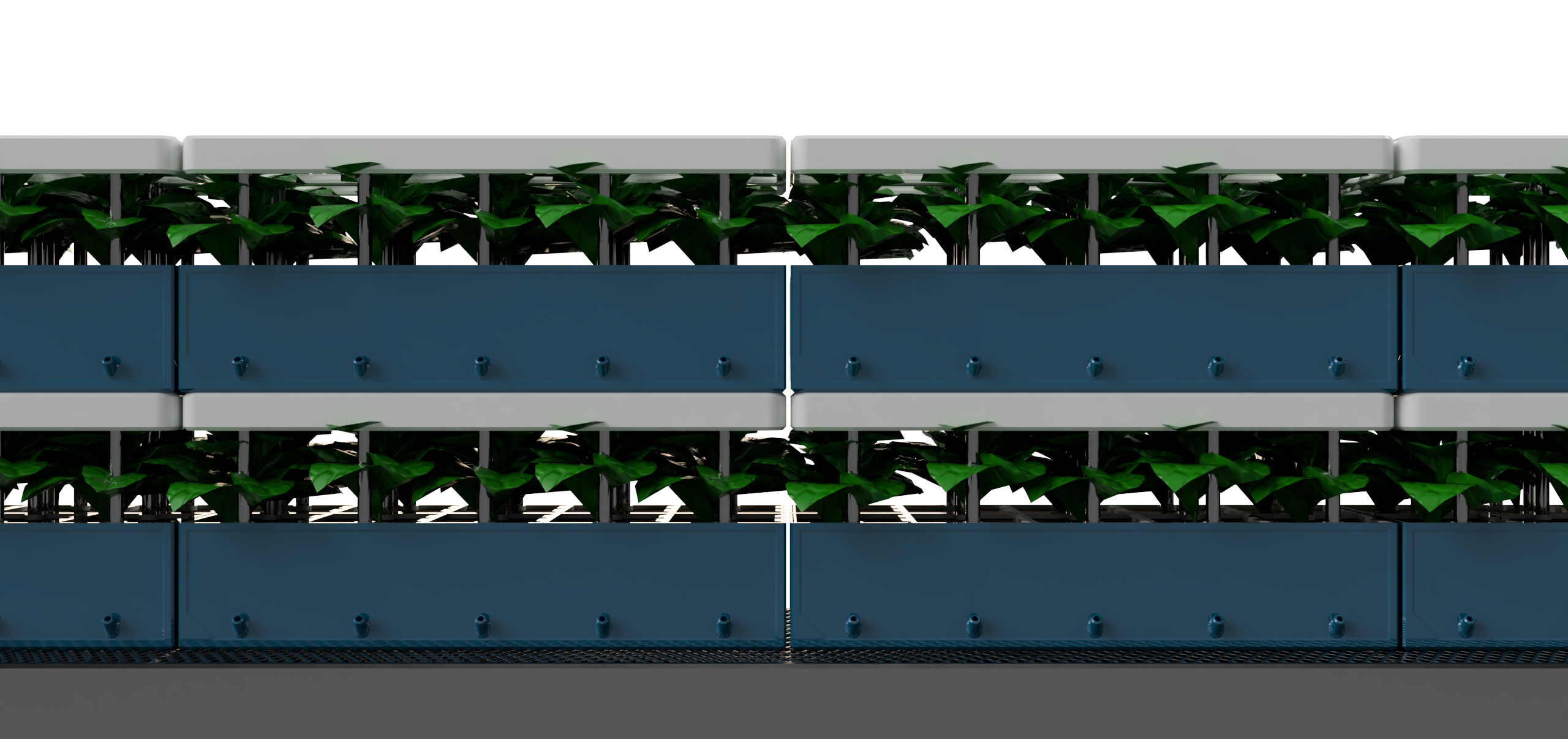
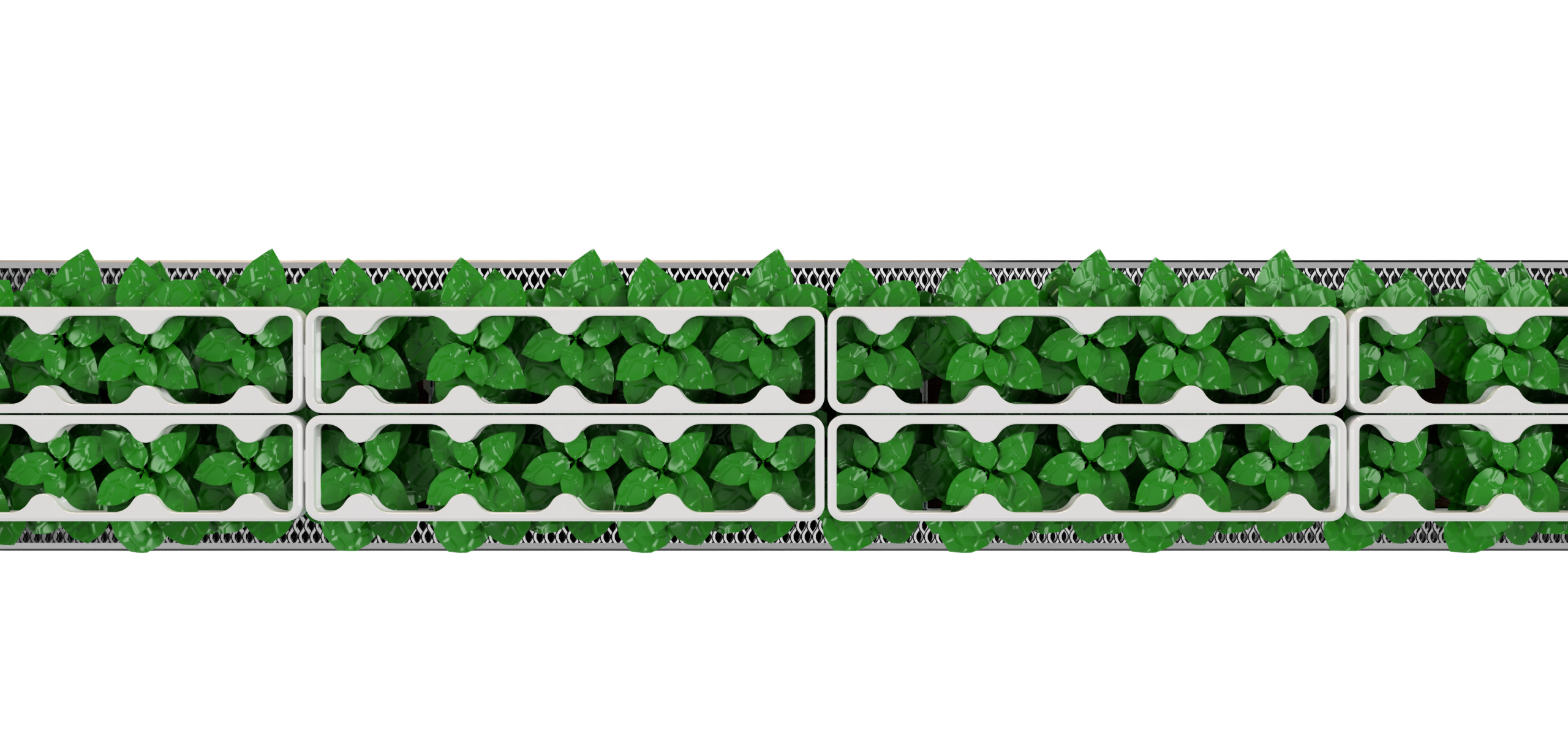
An industrial version of the project has been designed with a rectangular shape to optimize space efficiency, with the ability to hold multiple plant inserts. Each insert receives independent control over soil moisture and UV light levels. The design is easily scalable with two parameters, allowing for easy adjustment of planter pot size and the number of plant inserts.

Figure 3: An automated farm concept utilizing the industrial version of Project WASP, rendered by the Project WASP team.
Future Applications
Project WASP has the potential to revolutionize agriculture by using AW for freshwater irrigation, precisely controlling soil moisture and light exposure, and powering agriculture with renewable solar energy. This technology has applications in space farming, creating autonomous plant growth chambers, and constructing autonomous greenhouses.
Limitations
Atmospheric water generation is less efficient in dry climates due to low humidity or temperature. The integration of additional AW harvesting technologies, such as desiccants, could improve atmospheric water capture. Cold plate-collected AW may require purification due to atmospheric pollutants in certain regions.